

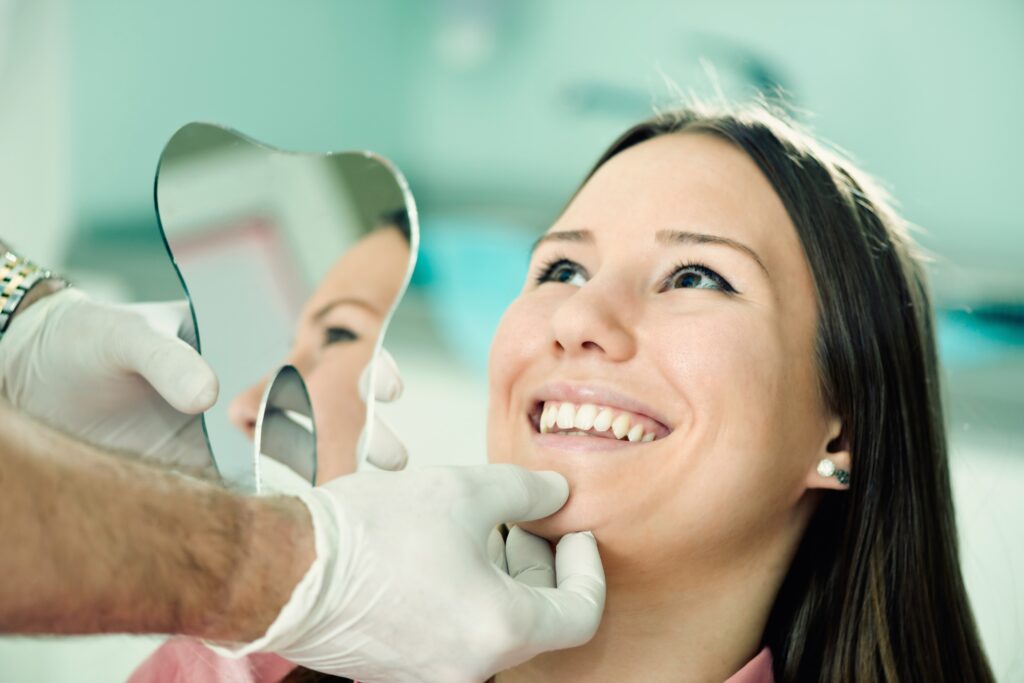
Why Does Professional Teeth Whitening Cost So Much More Than a Box of Strips?
If you’ve ever stood in the toothpaste aisle holding a $20 box of whitening strips while wondering whether it’s worth paying $500 or more at the dentist, you’re not alone. It’s one of the most common questions patients bring to Dr. Tyler DeLaurentis at Pinnacle Dental in Farmington, CT—and the honest answer is that the price gap isn’t arbitrary. It comes down to three things: how much active ingredient is actually allowed in each product, who’s applying it, and how fast you want results.
Below, we break down exactly where that cost difference comes from, what the research says about results, and how to decide which option makes sense for your smile and your budget. Contact our Farmington dental practice at (860) 470-3660 to schedule your professional whitening consultation.
The Cost Comparison at a Glance
| Treatment Type | Typical Cost | Time to Results |
| In-office (Philips Zoom!, laser whitening) | $500 – $1,200 | Same day |
| Custom-fitted take-home trays | $300 – $800 | 1–2 weeks |
| Standard take-home kits | $250 – $500 | 2–3 weeks |
| Over-the-counter strips/trays | $20 – $100 | 3–4 weeks (limited results) |
At first glance, that’s a difference of up to 20 times between the cheapest strip and the highest-end in-office visit—and that ratio isn’t an exaggeration. Industry data shows professional in-office whitening can run anywhere from five to twenty times the cost of over-the-counter products, depending on the treatment and provider (NewMouth, Teeth Whitening Statistics and Trends). So what are you actually paying for in that gap?
Reason #1: The Whitening Gel Itself Is a Different Product
This is the single biggest driver of the cost gap, and most patients don’t realize just how different the formulas are.
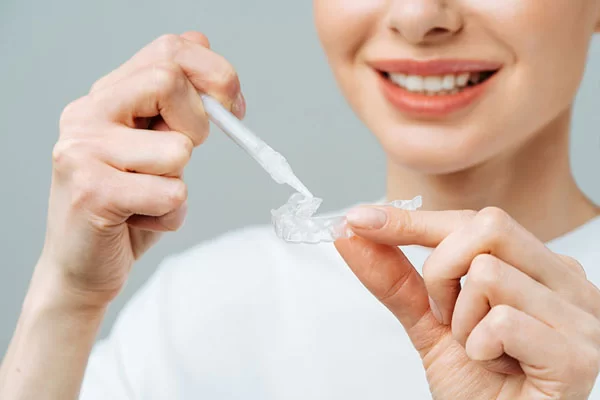
The American Dental Association considers hydrogen peroxide safe for at-home, over-the-counter use only at concentrations up to about 3.5% (Gentle Dental, Is Hydrogen Peroxide Safe for Teeth Whitening?). Professional chairside gels, by contrast, can use hydrogen peroxide concentrations as high as 36%—roughly ten times stronger—which is why in-office treatment can lighten teeth in a single 45–60 minute visit instead of weeks of daily use.
That strength difference is also why higher-concentration formulas are restricted to professional settings in the first place: regulators have found that products above roughly 6% hydrogen peroxide carry a higher risk of soft-tissue irritation and other side effects when used without supervision (CosmeticsDesign-Europe, Teeth Whitening Regulations Across the Globe).
In practical terms, the gel your dentist uses isn’t just a “premium” version of the drugstore strip—it’s a different category of product entirely, one that requires professional application to be both effective and safe.
Reason #2: You’re Paying for Expertise, Not Just Materials
A tube of gel by itself doesn’t explain a $500–$1,200 price tag. What you’re really paying for during an in-office visit is:
- A pre-treatment exam. Dr. DeLaurentis checks for cavities, gum disease, or exposed roots before whitening because bleaching gel applied over untreated decay or inflamed gum tissue can cause real discomfort.
- Custom shade tracking. Professional whitening is monitored in real time, so treatment can be adjusted if your teeth respond faster (or slower) than expected.
- Protective isolation. Your gums and soft tissue are shielded from the high-concentration gel, something a drugstore strip has no way of doing.
- Same-day results. Chairside whitening delivers a visibly brighter smile in one 45–60 minute appointment, versus 3–4 weeks of daily strip application for a much smaller shade change.
Reason #3: Clinical Results Back Up the Price Difference
It’s not just marketing; the research supports what patients experience. A randomized controlled clinical trial comparing at-home 20% carbamide peroxide whitening (the professional-strength option) against two common over-the-counter systems found that the higher-concentration formula produced significantly greater color change than either OTC product (PMC, Evaluating the Efficiency of Two Different OTC Tooth Whitening Systems). In other words, when you upgrade from a strip to a professional-strength gel, you’re not just paying for convenience; you’re paying for a measurably better result.
That’s also consistent with what’s happening industry-wide: teeth whitening remains the single most popular cosmetic dental procedure, with nearly 19% of U.S. adults having had it done professionally at some point (American Dental Association)—a strong signal that most people who try it consider it worth the investment.
So Which Option Is Actually Right for You?
Cheap whitening strips aren’t a bad choice for very mild, surface-level staining or for maintaining results between professional treatments. But if you’re dealing with years of coffee, tea, wine, or tobacco staining, the lower concentration allowed in OTC products often isn’t strong enough to make a noticeable dent, and using strips too often can wear on enamel over time.
Custom take-home trays from Pinnacle Dental split the difference: a professional-strength gel you apply at home, molded to your exact bite for even coverage, typically producing visible results in 1–2 weeks at $300–$800.
In-office Philips Zoom! whitening is the right call if you want the fastest, most dramatic result, ideal before a wedding or a big interview, or simply because you don’t want to wait weeks for a brighter smile.
Ready to Close the Gap Between “Cheap” and “Effective”?
If you’re in Farmington, Plainville, New Britain, Hartford, Newington, or a nearby Connecticut community, Pinnacle Dental can walk you through exactly which whitening option fits your teeth, your timeline, and your budget. Dr. Tyler DeLaurentis and our team offer a consultation to assess your staining and recommend the most cost-effective path to a brighter smile.
Call (860) 470-3660 or visit us at 218 Main St., Farmington, CT 06032 to schedule your consultation with a Farmington dentist who will give you a straight answer on cost before you commit to anything.