

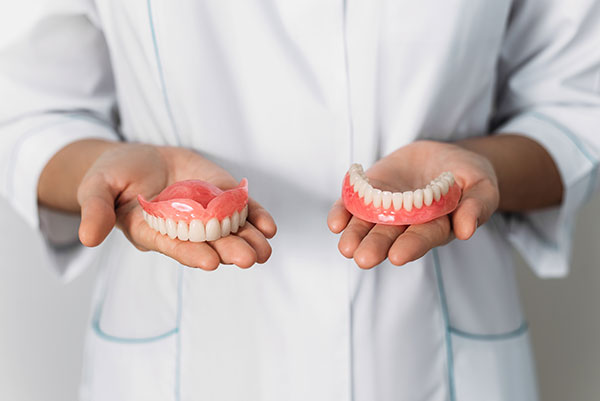
Missing Teeth Aren’t Just a Cosmetic Problem—They’re a Health Emergency in Slow Motion.
Most people think of dentures as something to get “when they’re ready”—as if tooth loss is something you can safely put off until the timing is better or the budget is bigger. But here’s what those conversations rarely include: waiting has its own price tag. And in many cases, that price is steeper than the cost of treatment itself.
At Pinnacle Dental in Farmington, CT, Dr. Tyler DeLaurentis sees this story play out regularly. Patients who delay replacing missing teeth for one year, two years, or five years often arrive dealing with consequences that extend far beyond an incomplete smile. This blog breaks down exactly what those consequences are, with research to back it up.
If you’ve been putting off dentures, keep reading. This isn’t about pressure — it’s about giving you the full picture. Contact our Farmington dental practice at (860) 470-3660 to schedule your denture consultation. Whether you live in Farmington or nearby communities like Plainville, New Britain, Hartford, or Newington, our team is here to help.
1. Jawbone Loss: The Clock Starts the Day a Tooth Is Gone
This is the one most people don’t know about until it’s already happening to them. Your jawbone stays strong and dense because the tooth roots stimulate it constantly through chewing. The moment a tooth is lost, that stimulation stops — and the bone beneath begins to resorb, or literally dissolve away.
“The jawbone can lose up to 25% of its width in the first year after a tooth is lost, and bone loss continues throughout life without intervention.” — National Library of Medicine
Over time, this leads to what dentists call “dental drift” and “facial collapse”—the sunken, aged appearance that develops when there’s no underlying bone structure to support the face. Patients who have worn conventional dentures for many years without implant support often experience this because traditional dentures sit on top of the gum and do not stimulate the bone below.
Why does this matter for cost? Because the longer you wait, the less bone you have—and the more likely you’ll need bone grafting ($300–$3,000 per site) before implant-supported dentures become possible. A decision made now, with adequate bone, could cost significantly less than the same decision made after years of bone loss.
2. Neighboring Teeth Begin to Drift—And That Changes Everything
Teeth are held in position partly by each other. When one is missing, the adjacent teeth begin to drift into the empty space. This isn’t a slow, harmless shift — it can destabilize your entire bite within months.
“Tooth migration following tooth loss can occur within weeks. Left untreated, it leads to bite misalignment, increased cavity risk, and the need for orthodontic correction.” — National Library of Medicine
Once teeth drift, the treatment picture gets more complicated and more expensive. What might have been a straightforward denture or partial now requires bite correction, orthodontic intervention, or additional restorative work to address the cascading effects of that original gap.
Partial dentures—an affordable option for patients with remaining healthy teeth—are most effective when placed before neighboring teeth have shifted. Dr. Tyler DeLaurentis, a Farmington dentist at Pinnacle Dental, often counsels patients that acting while remaining teeth are still in a good position preserves more options and reduces total treatment costs.
3. Nutritional Deficiency and Systemic Health Decline
This one surprises people the most. It’s not just about what your smile looks like—it’s about what you can actually eat. People with significant tooth loss systematically eliminate hard, crunchy, or fibrous foods from their diets: raw vegetables, whole fruits, lean proteins, and nuts. These foods are the foundation of a nutritionally complete diet.
“Edentulous (toothless) adults are significantly more likely to have nutrient deficiencies in fiber, protein, and essential vitamins compared to dentate individuals. Poor chewing ability is independently associated with malnutrition in older adults.” — National Library of Medicine
The downstream health effects of this dietary change compound over time. Studies have linked poor chewing ability and associated nutrient deficiencies to increased risk of cardiovascular disease, diabetes complications, and cognitive decline—conditions whose treatment costs dwarf the cost of dentures many times over.
A well-fitted set of dentures or, even better, implant-supported dentures restores close to normal chewing function. This isn’t a minor lifestyle benefit — it’s a direct line to systemic health.
4. The Link Between Tooth Loss and Cognitive Decline
The connection between oral health and brain health is one of the most actively researched areas in medicine right now — and the findings are striking.
“Adults with tooth loss have a 1.48 times higher risk of cognitive impairment and a 1.28 times higher risk of dementia compared to those with all their natural teeth.” — Journal of the American Geriatrics Society, 2021
Researchers believe the connection operates through multiple pathways: reduced chewing stimulation decreases blood flow to the hippocampus (the brain’s memory center); tooth loss is associated with inflammatory changes that affect neural tissue; and the nutritional deficiencies described above directly impact brain function.
None of this means dentures are a guaranteed shield against cognitive decline. But it reinforces something important: oral health is not separate from general health. For patients in Farmington, New Britain, Hartford, or surrounding Connecticut communities who are weighing whether to address tooth loss now or later, this data should factor into that conversation.
5. Gum Disease Spreads in the Presence of Untreated Gaps
Open spaces in the gumline don’t just sit there passively. They become traps for bacteria, food debris, and plaque that’s difficult to clean effectively. This accelerates the progression of periodontal (gum) disease, which is, itself, a risk factor for heart disease, stroke, and diabetes complications.
“Periodontitis affects approximately 47% of adults over age 30 in the United States — and that prevalence increases to almost 60% in adults 65 and older.” — NIH Medline Plus Magazine
Untreated gum disease doesn’t just threaten remaining teeth—it can disqualify patients from implant treatment or require extensive (and expensive) periodontal therapy before any restorative work can begin. Treating advanced gum disease typically adds $1,500 to $4,000+ to a treatment plan, depending on severity.
Addressing tooth loss promptly—with a properly fitted partial or full denture—helps maintain the integrity of surrounding tissue and reduces the breeding ground for harmful bacteria.
6. The Mental and Emotional Toll Is a Real Health Cost
The healthcare community has increasingly recognized that psychological well-being is inseparable from physical health. And for people living with significant tooth loss, the emotional burden is well-documented.
“Over 36% of adults report that tooth loss negatively impacts their self-confidence, and nearly 1 in 4 adults with tooth loss say they avoid smiling or hide their mouths in social situations.” — American Dental Association survey data
Social withdrawal, avoidance of professional opportunities, changes in relationships — these aren’t trivial concerns. Patients frequently report that their confidence transformation after receiving well-fitted dentures is as meaningful to them as the functional restoration.
At Pinnacle Dental, serving patients from Farmington, Plainville, New Britain, Hartford, and Newington, CT, Dr. Tyler DeLaurentis and his team understand that the decision to pursue dentures is as much emotional as clinical. That’s why consultations at Pinnacle are designed to be exploratory and pressure-free — helping you understand your options before making any decisions.
7. The Financial Cost of Waiting Is Often Higher Than the Cost of Acting Now
Let’s bring this back to dollars, because that’s often the reason patients delay in the first place.
Here’s the math that most patients don’t see until they’re already dealing with the downstream effects:
- Bone grafting (if needed after waiting): $300–$3,000 per site
- Orthodontic correction for drifted teeth: $3,000–$8,000
- Periodontal therapy for advanced gum disease: $1,500–$4,000+
- Additional restorations for secondary decay: $200–$1,500 per tooth
- Premium partial or full denture (acting now): $1,000–$4,000 per arch
Waiting isn’t a neutral financial decision. In many cases, it converts a straightforward treatment into a complex, multi-step process that costs two to three times as much. Dr. Tyler DeLaurentis, Farmington dentist at Pinnacle Dental, provides fully itemized treatment plans at consultations—so patients can make clear-eyed decisions about cost and timing, not decisions based on incomplete information.

Don’t Let the Cost of Waiting Become Greater Than the Cost of Treatment
Tooth loss is common. It affects tens of millions of Americans. But common doesn’t mean inconsequential—and “I’ll deal with it later” is a decision that comes with its own set of costs: physical, financial, and emotional.
If you’ve been living with missing teeth in the Farmington area, now is genuinely a good time to start the conversation. Not because of pressure, but because the longer the timeline stretches, the more complicated (and expensive) the solution tends to become.
Dr. Tyler DeLaurentis and the Pinnacle Dental team provide transparent, no-pressure consultations that include a full clinical assessment and itemized cost breakdown before any treatment begins. There are no surprises — just a clear path forward. Call our Farmington dental office at (860) 470-3660 to schedule your denture consultation at Pinnacle Dental today. Serving Farmington, Plainville, New Britain, Hartford, and Newington, CT.