

A Faster, Surgery-Free Way to Replace Missing Teeth Near You
Dental bridges have been used in restorative dentistry for decades, and in 2026, modern materials like zirconia and AI-assisted fabrication have made them more precise, natural-looking, and durable than ever. If you’ve lost one or more teeth and want a fixed, non-surgical solution, a dental bridge remains one of the most reliable options available.
At Pinnacle Dental in Farmington, CT, Dr. Tyler DeLaurentis and our restorative team place custom dental bridges for patients across Hartford County, including Plainville, New Britain, Newington, West Hartford, Avon, and Simsbury. Whether you’re searching for a dentist near you who places bridges or you’re trying to decide between a bridge and a dental implant, this page gives you the honest information you need to make a confident decision.
Ready to transform your smile? Call our Farmington dental office at (860) 470-3660 to schedule your consultation today.
What Are Dental Bridges?
A dental bridge is a fixed prosthetic that spans the gap left by a missing tooth. It consists of an artificial tooth (called a pontic) anchored by crowns placed over the healthy teeth on either side of the gap (called abutment teeth). The result looks, feels, and functions like a natural tooth — and it stays in place permanently, unlike a denture.

Benefits of Dental Bridges: What Actually Changes
Every benefit below addresses a real, measurable consequence of tooth loss — not a vague promise. Here’s what changes when you restore a missing tooth with a dental bridge.
Your Smile Looks Complete Again
Modern porcelain and zirconia pontics are shaded, shaped, and sized to match your surrounding teeth precisely. The result is nearly undetectable—even up close. This matters most for missing front teeth, where a gap is immediately visible in conversation and photos.
Chewing Becomes Normal Again
Tooth loss forces you to compensate — chewing on one side, avoiding harder foods, or swallowing larger pieces that haven’t been broken down properly. A dental bridge restores a full chewing surface and redistributes bite forces evenly, which reduces wear on your remaining natural teeth and supports better digestion and nutrition.
Speech Clarity Returns
Your tongue contacts your teeth hundreds of times per minute when you speak. Missing front teeth or molars can produce lisping, slurring, or difficulty forming certain sounds—particularly “s,” “th,” and “f.” A bridge restores the structural support your tongue needs for natural articulation.
Adjacent Teeth Stay in Place
A gap in your mouth is not a static problem. Neighboring teeth gradually drift toward the empty space, and the tooth above or below the gap (the opposing tooth) can begin to erupt downward or upward—a process called “super-eruption.” This throws off your bite (occlusion), increasing the risk of jaw pain, TMJ issues, and tooth decay in hard-to-clean, shifted areas. A bridge fills the space immediately and halts this cascade.
Facial Structure Is Preserved
Bone in your jaw requires stimulation from tooth roots to maintain its density. When a tooth is lost, that stimulation disappears, and bone resorption begins—the jaw literally shrinks in that area over time. While traditional bridges don’t replace the root (implant-supported bridges do), they prevent the surrounding teeth from shifting, which itself contributes to facial structural stability and a more youthful appearance.
Gum Health Is Easier to Maintain
Open gaps attract food debris and bacteria. Because a bridge covers and seals the gumline in the treated area, it eliminates the pocket where plaque accumulates—reducing your risk of gum disease (gingivitis and periodontitis) and tooth decay in neighboring teeth.
No Surgery Required
Unless you choose an implant-supported bridge, the procedure requires no incisions, no bone grafting, and no healing period measured in months. Most traditional dental bridges are placed in two appointments over two to three weeks. For patients who are medically ineligible for implants or who want a faster solution, this is a meaningful advantage.
Confidence Comes Back
This one is harder to quantify but easy to recognize. Patients who’ve avoided smiling in photos, declined social dinners, or held back in professional settings because of a missing tooth consistently report a significant shift in self-confidence once the bridge is placed. A complete smile changes how you interact with the world.
Why Patients in Farmington Choose Pinnacle Dental for Bridges
Choosing where to have a dental bridge placed is as important as choosing whether to get one. Here’s what differentiates our approach:
- Digital fabrication for a more precise fit: We use digital impressions—no uncomfortable goopy trays—and work with labs that leverage modern fabrication technology, including zirconia milling and 3D workflows. The result is a bridge that fits with greater precision than traditional methods and requires fewer adjustments at delivery.
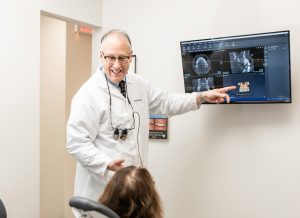
- A dentist who explains the trade-offs: Dr. DeLaurentis presents every restorative option—bridges, implants, and, where relevant, partial dentures—without steering you toward the most expensive solution. His goal is the right fit for your oral health, lifestyle, and budget. Patients who came in expecting one recommendation often leave with a different, better one.
- Flexible payment options for Hartford County residents: We accept most major dental insurance plans and offer financing through CareCredit, Sunbit, and Proceed Finance. We also offer an in-house membership plan for uninsured patients. Out-of-pocket costs shouldn’t prevent you from restoring a missing tooth.
- Conveniently located for patients across the region: Our office at 218 Main Street, Farmington, CT, is easily accessible for patients searching for a dentist near you in Plainville, New Britain, Hartford, Newington, West Hartford, Avon, and Simsbury. We’re open Monday through Thursday and welcome new patients.
Dental Bridge vs. Dental Implant: An Honest Comparison
This is the question every patient eventually asks—and it deserves a straight answer. Both are excellent tooth replacement options. Which one is right for you depends on your bone health, timeline, budget, and the condition of the teeth surrounding the gap.
| Factor | Dental Bridge | Dental Implant |
|---|---|---|
| Surgery required? | No (traditional bridge) | Yes—implant post placed in the jawbone |
| Treatment timeline | 2–3 weeks (2 appointments) | 3–6+ months (osseointegration required) |
| Affects adjacent teeth? | Yes—crowns placed on abutment teeth, requiring enamel reduction | No—an implant is self-supporting |
| Jawbone preservation | Partial—prevents teeth from shifting, but doesn’t replace the root | Full—implant root stimulates bone like a natural tooth |
| Longevity | 10–15 years with proper care (clinical studies: 70–85% survival at 15 years) | 15–25+ years (10-year survival rate ~95%) |
| Cost (general range) | Lower upfront—often $2,500–$5,000 for a 3-unit bridge | Higher upfront—typically $3,500–$6,000+ per implant |
| Insurance coverage | Most major plans cover a portion | Coverage varies widely—often limited |
| Bone density required? | Not necessarily—healthy adjacent teeth are the key requirement | Yes—insufficient bone may require grafting first |
| Best for | Patients wanting fast, non-surgical tooth replacement, and those with healthy adjacent teeth | Patients prioritizing maximum longevity and bone preservation |
A bridge is not a compromise — it’s a different tool with different strengths. If you have healthy teeth on both sides of the gap and want a fixed, affordable solution without surgery, a dental bridge is often the smarter choice. If bone preservation is the top priority and you qualify for surgery, an implant may be worth the additional investment. Dr. DeLaurentis will review both options with you at your consultation and give you a frank recommendation based on your specific oral health.
What to Realistically Expect from a Dental Bridge
A dental bridge restores chewing function, speech clarity, and smile aesthetics without surgery or a prolonged healing period. It prevents tooth shifting, protects your bite, and is covered (at least partially) by most major dental insurance plans. With proper oral hygiene — daily brushing and flossing with a floss threader or interdental brush under the pontic — a well-placed bridge can last a decade or more.
Placing a traditional bridge requires reducing enamel on the abutment teeth—a permanent change that means those teeth will always need crowns going forward. The bridge itself doesn’t replace the tooth root, so some bone resorption in the gap area can occur over time (this is why implant-supported bridges are often recommended when implants are a viable option). And like any restoration, a bridge will eventually need replacement—typically after 10 to 15 years.
None of these trade-offs disqualifies bridges as an excellent solution. They simply mean the decision should be made with clear eyes and a thorough exam—which is exactly how we approach it at Pinnacle Dental.
Most patients complete their traditional dental bridge treatment in two appointments over 2–3 weeks. At your first visit, Dr. DeLaurentis prepares the abutment teeth, takes digital impressions, and fits you with a temporary bridge. When your custom bridge is ready from the lab, you return for fitting and cementation. The second appointment typically takes under an hour.
Are You a Good Candidate for a Dental Bridge?
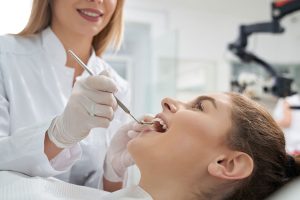
Most adults who are missing one to three consecutive teeth and have healthy neighboring teeth are candidates for a traditional dental bridge. The key requirements are:
- One or more missing teeth with intact, structurally sound adjacent teeth
- No active, untreated gum disease (periodontitis must be resolved before a bridge is placed)
- Good oral hygiene habits—or a willingness to commit to the maintenance of a bridge—are required
- No severe bite issues that would place excessive force on the bridge
If you have bone loss or are missing the adjacent teeth needed to anchor a bridge, an implant-supported bridge or another restorative solution may be more appropriate. The only way to know for certain is a clinical exam and, often, a set of digital X-rays.
Frequently Asked Questions
Clinical research puts the 15-year survival rate for fixed dental bridges at 70–85%, with many lasting well beyond that with diligent oral hygiene. The most common reasons bridges need replacement are decay at the margins of the abutment crowns (caused by poor hygiene under the bridge) and changes to the supporting teeth. Brushing twice daily, using a floss threader or water flosser daily, and attending regular cleanings at our Farmington office are the biggest factors in extending your bridge’s lifespan.
The preparation appointment is performed under local anesthesia — you shouldn’t feel pain during the procedure. Some sensitivity in the abutment teeth is common for a few days after the enamel is reduced, and the temporary bridge may feel slightly different from your natural bite. By the time your permanent bridge is placed, most patients report it feels comfortable and natural almost immediately. If you have dental anxiety, we offer sedation options at our Farmington office.
Not right away. Active gum disease (gingivitis or periodontitis) compromises the health of the tissues that support a bridge, and placing one before treating the disease would likely cause the bridge to fail prematurely. We’ll address any periodontal concerns first through a deep cleaning (scaling and root planing) or periodontal maintenance, and once your gums are healthy and stable, we can proceed with the bridge. This sequencing protects your investment long-term.
With modern all-ceramic and zirconia materials, a dental bridge is virtually indistinguishable from natural teeth — including the translucency and surface texture that give real teeth their appearance. The shade is matched precisely to your surrounding teeth. Unless you point it out, most people won’t know.
In most cases, yes — dental bridges are considered a major restorative procedure and are covered at 50% by many dental insurance plans after the deductible, up to your annual maximum. Coverage varies significantly by carrier and plan, and some plans have waiting periods for major work. We’ll run a benefits check before your consultation so you know your out-of-pocket costs before committing to treatment. We also accept CareCredit, Sunbit, and Proceed Finance for the portion that insurance doesn’t cover.
Ready to Restore Your Smile? We’re Accepting New Patients Near You.
Schedule a dental bridge consultation at Pinnacle Dental in Farmington, CT. Dr. DeLaurentis will review your options, check your insurance benefits, and give you a clear recommendation — no pressure, no guesswork.
Call (860) 470-3660 to book your consultation. We’re located at 218 Main St., Farmington, CT 06032. Our dental office is open Monday through Thursday, 8:30 am–5:30 pm, serving Hartford County and the surrounding areas.