

Are Dental Bridges Worth the Risk? Here’s What You Should Know
A dental bridge is one of the most reliable ways to replace a missing tooth, but like any restorative treatment, it isn’t completely risk-free. If you’re searching for a dentist near you to talk through dental bridge risks and complications, you’ve landed in the right place. This guide walks through every potential complication in plain language, who’s most likely to experience them, and how a skilled dentist in Farmington can help you avoid them altogether.
Have questions about your specific situation? Call Pinnacle Dental at (860) 470-3660 to schedule a consultation. We proudly serve patients throughout Farmington, Plainville, New Britain, Hartford, and Newington, CT.
Quick Refresher: How a Dental Bridge Works
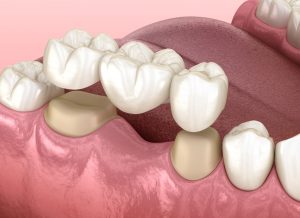
Before diving into the risks, it helps to understand the basic anatomy of a bridge. A traditional bridge consists of one or more artificial teeth, called pontics, fused between two dental crowns. Those crowns anchor onto your natural teeth on either side of the gap, known as abutment teeth, which is why bridges feel and function so much like your original teeth.
A cantilever bridge uses just one abutment tooth instead of two, which can be useful when there’s only a healthy tooth on one side of the gap. Some patients also receive a temporary bridge to protect the prepared teeth and gums while their permanent bridge is custom-made at a dental laboratory.
Understanding this structure makes the risks below much easier to follow, since most complications trace back to either the abutment teeth or the fit of the bridge itself.
Why Patients Still Choose Dental Bridges
Despite the risks we’ll cover, bridges remain a go-to option in restorative dentistry for good reason:
- Restored Function: A well-fitted bridge lets you chew comfortably and speak clearly again, restoring oral health that a gap in your smile can quietly undermine over time.
- Natural Appearance: Today’s dental crowns and pontics are crafted to blend with your natural teeth, so most people won’t notice you have one.
- Bite Protection: Filling the gap stops neighboring teeth from drifting into the space, which helps prevent bite misalignment down the road.
- Long-Term Durability: With good dental hygiene and routine dental cleaning, modern zirconia bridges can last 15 to 20 years.
- Lower Upfront Cost: Compared to dental implants, traditional bridges typically involve a smaller initial investment and don’t require surgery, which makes them appealing for patients who want a faster, less invasive path back to a complete smile.
Understanding Dental Bridge Risks and Complications
Traditional and cantilever bridges depend on healthy natural teeth for support. To anchor the crowns, your dentist has to remove a layer of enamel from the abutment teeth—a necessary step, but one that permanently changes those teeth and opens the door to a few possible issues:
- Tooth Sensitivity: It’s common to notice new sensitivity to hot, cold, or sweet foods after the enamel is reshaped. This usually fades within a few weeks, though a small number of patients have lingering discomfort.
- Decay Around the Margins: If a crown doesn’t seal perfectly against the tooth, bacteria can sneak in underneath it. Combined with inconsistent dental hygiene, this creates the conditions for decay to quietly develop where you can’t see or feel it until it’s advanced.
- Cracked or Weakened Teeth: Abutment teeth carry more biting force than they were originally built for. Over years of chewing — especially hard or sticky foods — this added stress can lead to small fractures or, in rarer cases, a more serious break.
This is a risk many patients don’t hear about until they ask directly, so we want to be upfront about it. Preparing an abutment tooth means removing enamel close to the nerve inside the tooth. In a small number of cases, this can irritate or, rarely, damage the nerve—leading to lingering sensitivity or, occasionally, the need for a root canal afterward.
An experienced dentist minimizes this risk through careful, precise preparation and digital imaging to map out exactly how much tooth structure needs to come off. It’s one of the reasons the skill of your dentist matters just as much as the materials used.
It’s uncommon, but some patients have a sensitivity or allergy to the metals (like nickel) used in certain bridge frameworks or, less frequently, to dental cements. Signs can include gum irritation, a metallic taste, or mouth soreness that doesn’t improve. If you have known metal allergies, mention them before treatment—your dentist can recommend metal-free options like all-ceramic or zirconia bridges, which sidestep this issue entirely and have become the more popular choice for exactly this reason.
A bridge that doesn’t sit quite right can cause problems well beyond simple annoyance:
- Bite and Chewing Problems: A misaligned bridge can make chewing harder foods uncomfortable and, over time, contribute to jaw strain or joint pain.
- Loosening or Falling Out: Dental cement naturally wears down over the years. Combined with bacteria buildup or inconsistent oral hygiene, this can cause a bridge to loosen or detach completely.
- Gum Irritation: A bridge with poor margins can rub against the gum line, leading to ongoing soreness, inflammation, or gum recession near the abutment teeth.
If your bridge feels loose, uneven, or uncomfortable, don’t wait it out—call our Farmington office at (860) 470-3660 so we can take a look before it becomes a bigger issue.
Because a bridge connects to your gums and adjacent teeth in ways a natural tooth doesn’t, it can create spots that are genuinely harder to clean—which raises your risk for gum disease if hygiene habits slip:
- Gingivitis: The earliest stage, marked by red, puffy, or bleeding gums around the bridge. It’s caused by plaque buildup and is usually reversible with better cleaning and a professional visit.
- Periodontitis: Left untreated, gingivitis can progress into a more serious infection that damages the bone and tissue holding your teeth in place—putting both the bridge and your remaining natural teeth at risk.
- Gum Recession: Receding gums can expose the roots of the abutment teeth, which often brings new sensitivity along with it.
Here’s something many patients don’t expect: unlike a dental implant, which is anchored directly into the jaw and stimulates the bone the way a natural tooth root does, a bridge sits on top of the gum and doesn’t provide that same stimulation. Without it, the jawbone beneath the missing tooth can gradually lose density — a process called bone resorption.
- Slow Bone Loss: This typically happens gradually over years rather than suddenly, but it can eventually affect the stability of nearby teeth.
- Facial Changes: In more advanced cases, especially after many years, bone loss can contribute to a sunken look in the lower face.
- A Consideration, Not a Dealbreaker: For many patients, this trade-off is still worth it given a bridge’s lower cost and faster timeline—but it’s worth discussing honestly with your dentist, especially if you’re choosing between a bridge and an implant. Some patients address this concern in advance with a bone graft if they’re leaning toward an implant later on.
When bacteria collect under or around a poorly sealed bridge, it can lead to a genuine infection that needs prompt attention:
- Persistent Pain or Swelling: Ongoing tenderness near the bridge is one of the clearest signs that something’s wrong underneath.
- Bad Taste or Breath: A lingering bad taste or odor that doesn’t go away with brushing can point to an infection brewing beneath the surface.
- Abscess: In more serious cases, a pocket of infection can form and require urgent treatment to keep it from spreading further into the jaw.
Modern zirconia bridges hold their color and translucency far better than older materials, but a few cosmetic considerations are still worth knowing about:
- Color Shifts: If you whiten your natural teeth later—through teeth whitening or otherwise—your bridge won’t change shade along with them, which can create a mismatch.
- Visible Metal: Older porcelain-fused-to-metal bridges can show a thin gray line at the gum if the gums recede. Modern all-ceramic and zirconia options largely eliminate this.
Who’s at Higher Risk for Bridge Complications?
Some patients are simply more prone to running into trouble with a bridge. Knowing your own risk factors going in helps you and your dentist plan smarter:
- Inconsistent Oral Hygiene: Skipping regular brushing, flossing, or professional cleanings dramatically raises your odds of decay and gum disease around the bridge.
- Existing Dental Problems: Untreated cavities or gum disease should usually be addressed before bridge placement, not after.
- Teeth Grinding (Bruxism): Grinding puts extra force on a bridge night after night, accelerating wear and raising the odds of damage.
- Certain Health Conditions: Diabetes, autoimmune conditions, or osteoporosis can all slow healing and raise infection risk.
- Smoking or Tobacco Use: Tobacco compromises gum health and healing, making complications more likely after placement.
- Age-Related Factors: Changes in bone density and gum health that come with age can add complexity to long-term bridge stability.
Bridge vs. Implant: Which Carries Fewer Long-Term Risks?
This is one of the most common questions we get from patients comparing tooth-replacement options, so let’s address it directly. A traditional bridge requires reshaping two healthy abutment teeth and doesn’t stimulate the jawbone, while a dental implant stands on its own and preserves bone density—but involves minor surgery, a longer treatment timeline, and typically a higher upfront cost.
Neither option is risk-free, and neither is universally “better.” A bridge tends to make more sense if you want a faster result without surgery, while an implant tends to make more sense if you want to avoid altering neighboring teeth and protect long-term bone health. The right call depends on your oral health, your budget, and your priorities—which is exactly what a consultation is for.

Preventing Dental Bridge Complications
Most of the risks above are preventable with the right habits and the right dentist:
- Brush twice daily with fluoride toothpaste, paying close attention to the area where the bridge meets the gum line.
- Floss daily using bridge-friendly tools like a floss threader or water flosser — regular floss can’t get under a bridge the way it can between natural teeth.
- Use an antimicrobial mouthwash to help keep bacteria in check around the abutment teeth.
- Keep up with dental cleanings every six months so your dentist can catch small problems before they become big ones.
- Choose an experienced restorative dentist who works with modern materials like zirconia and takes the time to get the fit right the first time.
- Follow post-bridge placement instructions closely — avoid hard or sticky foods during healing, take any prescribed medication as directed, and report anything that feels off right away.
Frequently Asked Questions
Call our Farmington dental office right away at (860) 470-3660. Avoid chewing on that side of your mouth in the meantime, and keep the bridge safe if it comes out completely — we may be able to recement it rather than replace it.
Watch for persistent pain, new sensitivity to hot or cold, gum swelling or tenderness, trouble chewing, or a change in how your bite feels. Any of these is worth a call to a dentist near you for an evaluation.
Yes. Bridges age along with the rest of your mouth, and changes in your gums, bite, or the abutment teeth can surface complications well after placement. This is exactly why we recommend regular checkups even once your bridge feels completely settled.
Yes—our team takes a prevention-first approach to every bridge we place, using modern materials and careful planning to minimize risk from the start. If you’re searching for a dentist near you in the Farmington area, we’d love to meet you.
Ready to Talk Through Your Options?
A dental bridge can be a genuinely great long-term solution—but only when it’s planned carefully and cared for consistently. If you’re weighing a bridge against other options, or you already have one and something doesn’t feel right, our Farmington team is here to help.
Call our dental office in Farmington at (860) 470-3660 to schedule a consultation. We’ll walk through your oral health, answer every question you have, and help you decide on the path that fits your needs, budget, and long-term goals. We’re proud to serve patients in Farmington, Plainville, New Britain, Hartford, and Newington, CT.