

Why Dental Bridges Are a Proven Way to Restore Your Smile
Losing a tooth or a few teeth changes more than just your smile. It changes how you eat, how you speak, and sometimes how you feel walking into a room. If you’ve been searching for a dentist near you to explore tooth replacement options, dental bridges are worth a serious look. They’re one of the most proven, cost-effective ways to restore missing teeth, and most patients qualify.
But not everyone is automatically a good candidate for dental bridges. The right fit depends on a few key factors—and that’s exactly what this page is here to help you figure out before you even pick up the phone.
Dr. Tyler DeLaurentis and the team at Pinnacle Dental in Farmington, CT, have helped patients throughout Central Connecticut, including Plainville, New Britain, Hartford, and Newington, restore their smiles with dental bridges, dental implants, and full smile makeovers. Here’s what you need to know.
Ready to find out if you qualify? Call (860) 470-3660 or schedule a consultation online today.
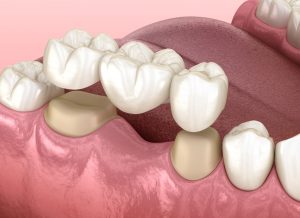
What Is a Dental Bridge, Exactly?
Before diving into candidacy, it helps to understand what a bridge actually does. A dental bridge is a fixed restoration that literally “bridges” the gap left by one or more missing teeth. It consists of:
- Pontics: The artificial tooth (or teeth) filling the gap.
- Abutment teeth: The natural teeth on either side that anchor the bridge using dental crowns.
- Crowns: Caps cemented onto the abutment teeth to hold everything securely in place.
Unlike removable partial dentures, a bridge is permanently cemented and stays in your mouth around the clock. It looks, feels, and functions like your natural teeth—and with proper oral hygiene and routine dental care, it can last 10 to 15 years or more.
Why Farmington Patients Choose Pinnacle Dental for Dental Bridges
Dr. Tyler DeLaurentis brings advanced training in restorative and cosmetic dentistry to every bridge case—whether it’s a simple single-tooth traditional bridge or a full smile makeover involving implant-supported restorations. At Pinnacle Dental, you won’t get a one-size-fits-all recommendation. You’ll get an honest evaluation of what will actually work best for your mouth, your budget, and your long-term oral health.
We use digital X-rays, 3D imaging, and precise digital impressions to ensure your bridge fits accurately from the first placement. Our office at 218 Main Street is conveniently located in Farmington and serves patients throughout Plainville, New Britain, Hartford, Newington, and the broader Central Connecticut area.
We’re also proud to offer:
- In-house membership plan for patients without insurance (through Kleer)
- Flexible financing via Sunbit, CareCredit, and Proceed Finance
- Sedation dentistry for anxious patients
- Porcelain bridges for natural, long-lasting aesthetics
Who Makes a Good Candidate for Dental Bridges?
Most patients missing one or more teeth are candidates for some type of bridge restoration. Here are the core factors Dr. DeLaurentis evaluates during your consultation.
1. You’re Missing One to Three Consecutive Teeth
Dental bridges work best when the missing teeth are in a row—not scattered throughout your mouth. A traditional bridge can replace one to three consecutive teeth in a single restoration.
Why consecutive? Because the pontic (the false tooth) needs to span a continuous gap. If you’re missing teeth in multiple different areas, you may need more than one bridge, or a different solution like partial dentures or dental implants may serve you better.
Whether you’re missing a front tooth affecting your smile or a back molar affecting your chewing ability, bridges can restore both function and aesthetics.
2. Your Neighboring Teeth Are Healthy Enough to Serve as Anchors
For a traditional bridge, the teeth on either side of the gap (your abutment teeth) play a critical role — they’re what the crowns sit on, and they bear the biting pressure of the restoration. That means they need to be:
- Structurally sound with enough tooth structure remaining
- Free from extensive decay or damage
- Healthy at the root level — not severely compromised by gum disease or infection
This is one of the most common reasons patients don’t qualify for a traditional bridge right away. The good news? It’s often fixable. If neighboring teeth have decay, we can treat them first. If the teeth aren’t strong enough to serve as abutments at all, an implant-supported bridge eliminates the need for neighboring teeth entirely—the bridge anchors to two dental implants instead.
3. Your Gums Are Healthy (or Can Be Made Healthy)
Active gum disease is a bridge disqualifier, but not a permanent one. Gum disease (periodontitis) weakens the gum tissue and bone that support your teeth, which can cause a bridge to fail over time if placed too soon.
If you have gum disease, Dr. DeLaurentis will recommend treating it first — typically with a deep cleaning (scaling and root planing) and a dedicated periodontal maintenance schedule. Once your oral health is stabilized, bridge placement can move forward.
Patients with healthy gums and a commitment to ongoing oral hygiene are excellent candidates. Keeping the area under the bridge clean with floss threaders or a water flosser is a non-negotiable part of long-term bridge care.
4. You Don’t Grind Your Teeth Excessively (or It’s Being Managed)
This one surprises a lot of patients: bruxism, chronic teeth grinding, can significantly shorten the life of a dental bridge. The repeated force against the restoration and the abutment teeth can cause cracking, loosening, or premature wear.
If you grind your teeth at night, that doesn’t automatically disqualify you. Many patients with bruxism successfully get dental bridges when they also wear a custom night guard to protect the restoration. Dr. DeLaurentis will assess your grinding patterns and factor that into your treatment plan.
5. Your General Health and Medical History Support Healing
Dental bridges are a conservative, non-surgical restoration for most patients, so general health concerns are less of a factor than they would be for dental implants. That said, your medical history still matters. Certain systemic conditions (uncontrolled diabetes, autoimmune disorders, or active infections) can slow healing or affect how tissues respond to treatment.
During your consultation, Dr. DeLaurentis reviews your full medical history to ensure bridge placement is safe and set up for long-term success. Transparency about your health history helps us personalize your dental care plan from the start.
6. You Have Adequate Jawbone Structure
Traditional bridges don’t require the same bone density as dental implants, but the underlying jawbone still plays a supporting role. Significant bone loss in the area of the missing tooth can affect how the bridge sits and functions over time.
For patients considering an implant-supported bridge, sufficient jawbone density is essential — implants need solid bone to fuse with. If bone loss has occurred, bone grafting is often an option to rebuild the foundation before implant placement.
Dr. DeLaurentis uses digital X-rays and 3D imaging at our Farmington office to evaluate your bone health accurately and recommend the right approach.

Types of Dental Bridges — and Which Might Fit You
Not all bridges are the same. Part of determining your candidacy is figuring out which type of bridge matches your situation.
- Traditional Bridge: The most common option. Two dental crowns are placed on the abutment teeth on either side of the gap, with a pontic suspended between them. Requires healthy neighboring teeth. Works for front or back teeth.
- Cantilever Bridge: Anchored to only one abutment tooth instead of two—useful when there’s only a healthy tooth on one side of the gap. Not ideal for high-pressure areas like back molars. Good for patients with a single healthy anchor tooth.
- Maryland Bridge (Resin-Bonded Bridge): Instead of full crowns, metal or porcelain “wings” bond to the backs of the adjacent teeth. Minimally invasive — no crown prep required. Best for front teeth, where biting pressure is lower. Doesn’t work as well for back teeth.
- Implant-Supported Bridge: Instead of relying on neighboring natural teeth, the bridge anchors to two dental implants surgically placed in the jawbone. This is the most durable, longest-lasting option—and importantly, it prevents the bone loss that happens when a tooth root is missing. No adjacent teeth are altered or stressed.
When a Bridge Might NOT Be the Right Fit
Bridges are an excellent option for the majority of patients, but there are situations where a different approach makes more sense:
- Weak or heavily decayed abutment teeth that can’t reliably support crowns
- Active, untreated gum disease (candidacy can be restored after treatment)
- Severe jawbone loss affecting bridge stability
- Unmanaged bruxism without a night guard in place
- Preference for preserving natural tooth structure because traditional bridges require reshaping the abutment teeth, some patients prefer implants, which leave neighboring teeth completely untouched
If any of these apply to you, that’s not a dead end—it just means we explore alternatives. Dr. DeLaurentis is committed to finding the tooth replacement option that genuinely fits your life, not the one that’s easiest to recommend.
Dental Bridges vs. Dental Implants: A Quick Comparison
Patients frequently ask about the difference between bridges and implants. Here’s an honest breakdown:
| Dental Bridge | Dental Implant | |
| Surgery required | No | Yes |
| Timeline | 2–3 weeks (2 visits) | 3–6 months |
| Affects neighboring teeth | Yes — requires crown prep | No |
| Prevents bone loss | No (traditional bridge) | Yes |
| Cost (approx.) | $2,500–$6,000 | $3,500–$6,000+ per tooth |
| Lifespan | 10–15+ years | 20+ years |
| Insurance coverage | Often partially covered | Less commonly covered |
Neither is universally “better”—the right choice depends on your oral health, timeline, budget, and long-term goals. Some patients end up choosing a combination: an implant for one area, a bridge for another.
What to Expect During Your Candidacy Evaluation
Your bridge consultation at Pinnacle Dental isn’t a high-pressure sales appointment—it’s a diagnostic conversation. Here’s what happens:
- Comprehensive oral exam: Dr. DeLaurentis checks the health of your gums, remaining teeth, and the condition of the gap
- Digital X-rays and/or 3D imaging: Evaluates bone density and root health in the treatment area
- Medical history review: Flags any systemic factors that could affect treatment
- Discussion of bridge types: Dr. DeLaurentis walks through which options fit your anatomy and goals
- Treatment plan and timeline: You leave knowing exactly what’s involved, how many visits, and what it costs
Most patients complete traditional bridge treatment in two visits over two to three weeks. Implant-supported bridges require additional time for implant healing, but the long-term result is worth it for the right patient.
Frequently Asked Questions
Yes, in most cases. Bruxism doesn’t automatically disqualify you, but it does need to be managed. A custom night guard protects the bridge and your abutment teeth from the forces of grinding. Dr. DeLaurentis will evaluate your bite and grinding patterns during your consultation and recommend the right protective solution alongside your bridge.
There’s no upper age limit. Older adults with healthy supporting teeth are excellent candidates and often prefer the fixed, non-removable comfort of a bridge over partial dentures. For younger patients (teens and young adults), Dr. DeLaurentis may discuss implants as a longer-term investment, since implants preserve bone and don’t require altering neighboring teeth. The jawbone needs to be fully developed before implant placement, typically around age 18–20.
Absolutely. We use high-quality porcelain and zirconia materials that are color-matched to your surrounding teeth. Zirconia bridges, in particular, offer exceptional strength and a completely natural appearance. Most people won’t be able to tell you have a bridge at all.
Yes. Front tooth bridges are very common and produce excellent cosmetic results. Because front teeth experience less biting pressure than back molars, Maryland bridges (which don’t require crown preparation on neighboring teeth) are sometimes an option for front tooth replacement as well.
Schedule Your Dental Bridge Consultation in Farmington, CT
If you’re missing teeth and wondering whether a dental bridge near you is the right solution, the best next step is a conversation. Dr. DeLaurentis will evaluate your oral health, walk you through your options, and give you a clear, honest recommendation—no pressure, no jargon.
Call Pinnacle Dental at (860) 470-3660 to book your appointment today. We’re open Monday through Thursday, 8:30 am–5:30 pm, and proudly serve patients from Farmington, Plainville, New Britain, Hartford, Newington, and surrounding communities in Central Connecticut.